
QIYUAN HAN · ARTS PREMIERS
About
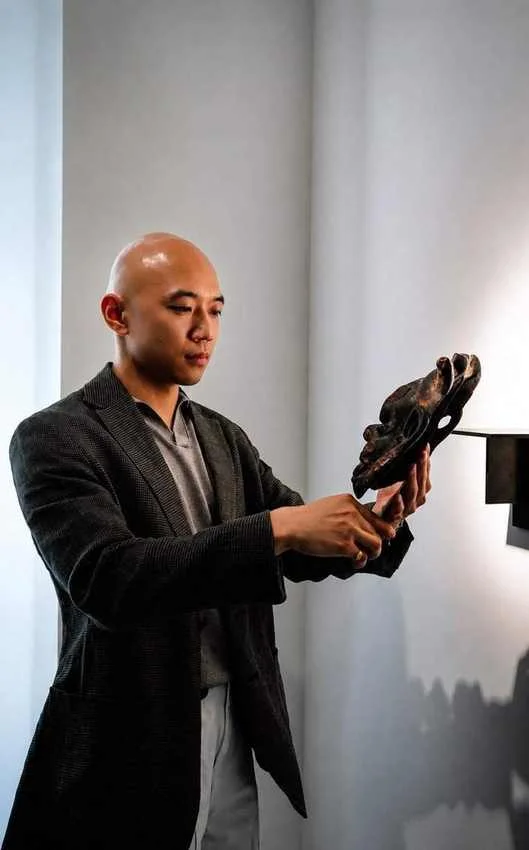
Qiyuan Han
Based in Paris, Qiyuan Han is the only Chinese professional among the new generation of tribal art specialists in France. An art intermediary and collector, he has a particular interest in ancient African art and also follows the traditional arts of Oceania and the ancient Americas.
Driven by a passion for ancient tribal art and its history, he places particular emphasis on the sculptural language and artistic expressiveness of each work, on its provenance, and on the ways in which collectors and art historians of different periods have understood and interpreted it.
Galerie Bernard Dulon
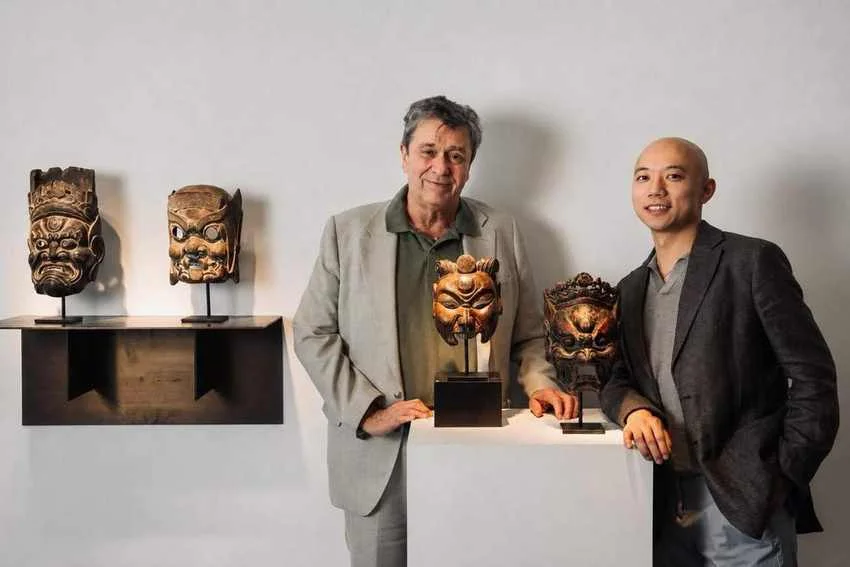
His experience as manager at Galerie Bernard Dulon in Paris brings him into close contact with significant works of ancient African art and with European private collections, and his daily collaboration with Bernard Dulon has deepened his understanding of connoisseurship and of the market.
Drawing on Chinese and wider Asian aesthetic traditions, he seeks to gradually develop an independent perspective on connoisseurship and to foster exchange between the European and Chinese collecting markets.
COLLECTING PHILOSOPHY
Tribal art is not the opposite of civilization, but an expression of the richness of human civilization.
I have always believed that tribal art and civilization are not two opposing concepts.
What fascinates me about ancient tribal art is precisely its forms of expression that resist definition within any single aesthetic system: refinement and the grotesque, magnificence and simplicity, structural rationality and freedom of imagination, materiality and spirituality. Certain works display bold and extraordinary forms while embodying a remarkably sophisticated artistic language and a distinctive cultural order.
I pay particular attention to the materials, construction, traces of age, and authenticity of each work. I also appreciate the independent aesthetic traditions developed by different peoples through their beliefs, rituals, and everyday lives. These artistic expressions need not conform to a universal aesthetic standard, nor should they be confined to the classifications established by modern art history.
To me, a sculpture of ancient tribal art is not merely an artwork. It is also a vessel of spiritual meaning and a witness to history. The masterpieces that have survived to the present day may represent only a small number of remaining works from artistic traditions that once flourished.
The significance of collecting lies not only in possessing these works, but also in seeking to understand the worlds from which they originated. Through an Asian aesthetic perspective distinct from established European traditions of connoisseurship, I hope to rediscover and reassess their artistic value.